AI and AutismWritten by Robin Fox – This article is from AIM Issue 2 (released November 2023).Photos and Illustrations Courtesy of Robin Fox The day started like any other as I greeted my students at Coginchaug High School in Durham, Connecticut.After decades in special education, I knew well that no two days are the same, but little did I know how different this day in 2010 would be. A merger of my worlds was about to take place that would lead to a breakthrough discovery, thirty-five years in the making. Back in the ‘70s, walking into my classroom was a different experience. Young adults with ASD (Autism Spectrum Disorder), sat together, yet alone, missing most social cues. Seeing them sparked me to wonder what their internal world is like and propelled me to study further to understand their neurodivergent experience. After two degrees, four decades, and probably a thousand autistic students later, I grasped the fundamental differences in the way an autistic person processes shared social space, compared with a neurotypical individual.
People with autism also have difficulty with Theory of Mind, which is understanding that other people have different thoughts and perspectives than you. Trying to figure out the multiple streams of viewpoints happening in real time can be daunting to most neurotypical people, and extremely difficult for those on the spectrum. Another social hurdle is that autistic individuals tend to present their raw, unfiltered self to others “as is”. If they’re in a loving, kind environment, all is well. If they’re in a culture where conformity is rewarded and uniqueness is shunned (enter any middle school to witness this in action), they are likely to be ridiculed, bullied, and ostracized.
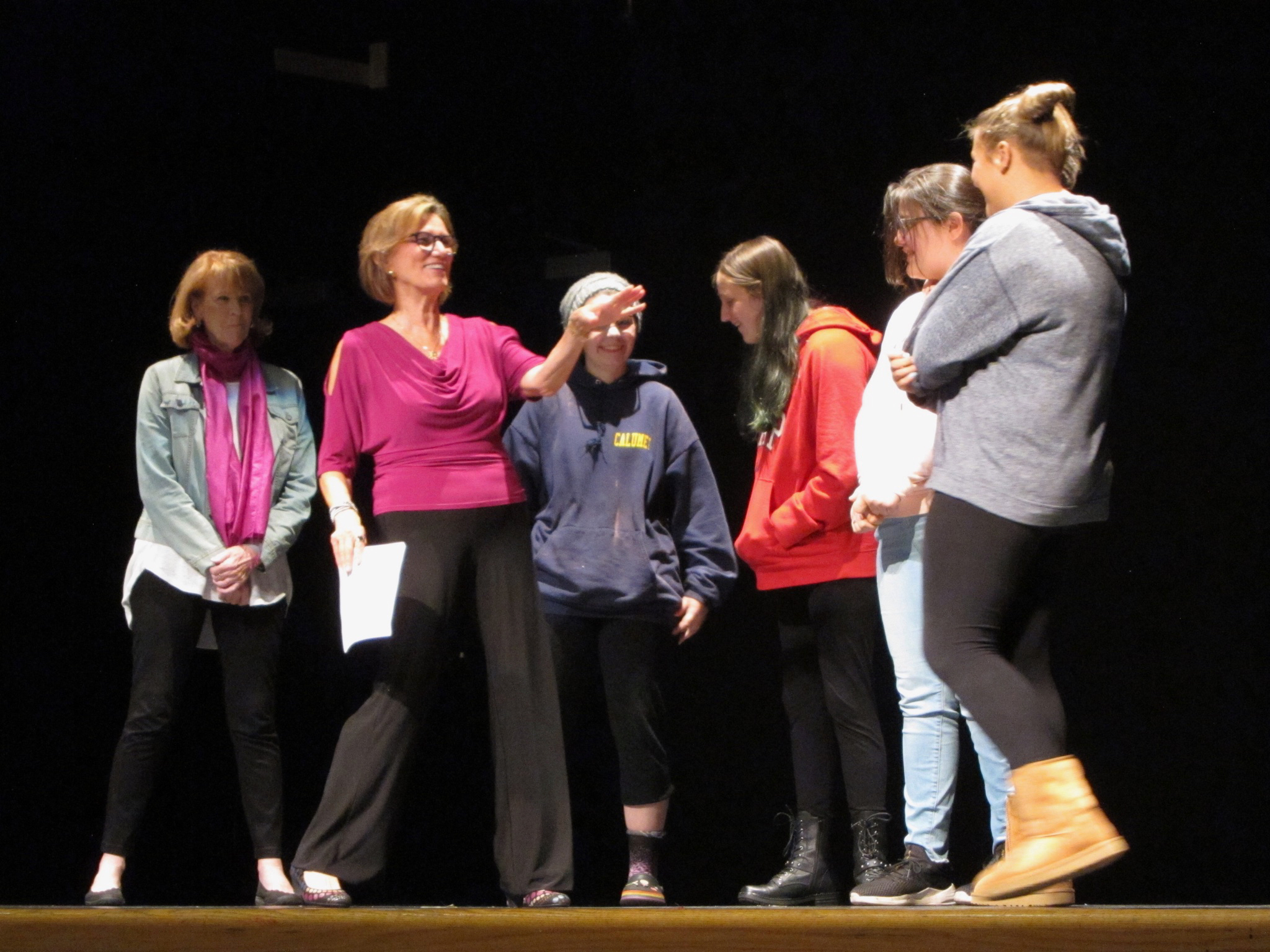
Most of the students in my 2010 class grappled with social challenges and many were autistic. Intellectually, they knew what social behaviors were expected of them, and knew that they weren’t meeting those expectations. Their faces and body language revealed their discouragement. As their restlessness and boredom mounted, I knew I needed to find a way to reach them. We were learning the concept of whole body listening, which meant listening with their bodies still and their eyes on the speaker. Yet, they could not keep their bodies still enough to listen. They stretched, they scratched, they twisted, and turned away. Their discomfort became my discomfort. To give them some relief, I veered off my lesson plan and offered them an improvisation game called Clap it Out. That’s when my worlds collided in the most surprising and advantageous way. I remember so vividly because, for a moment, time stood still as I watched my mind being blown. I turned toward the student next to me and asked him to clap at the same exact time as I clapped. He then turned to the person next to him and clapped in sync with him. The clap passed around the circle and came back to me. “Again!” they yelled. What? Could this be happening?? Are my resistant students shouting to play more together? At that moment, I realized I could use improvisation games to teach social connection and awareness. My students didn’t grasp the concept of whole body listening by traditional methods, but Clap it Out is a deceptively simple way to teach that skill. It works because players must focus with intention to execute the clap in sync with a partner. No time for stretching or scratching! They had to look on purpose and communicate non-verbally without pre-planning to get in sync. And they were having FUN.
My students on the spectrum love rules, which bring order and consistency. Without rules, the behaviors of others seem based on random, hidden agendas adding to the challenge of trying to make sense of social interactions. Improvisation exercises are rules-based, yet within those parameters, participants are free to use their impulses and creative urges to let it rip. Since there are no mistakes in improv and everyone’s a genius, my students on the spectrum find that, with improvisation, they finally have a safe haven where they can wholeheartedly express themselves. This discovery led to the most important pivots of my career. After explaining how “Yes, and...” works and trying a couple of rounds, one of the boys exclaimed, “It’s a formula! You just have to repeat what the last person says and add on to it.” It’s true that “Yes, and...” starts out formulaic. As children practice the “Yes, and...” strategy, the structure eventually becomes less rigid. The affirmations and additions become more natural, and the connections more fluid. The “Yes, and...” words eventually drop away altogether. Since back-and-forth exchanges are confusing for people with social challenges, the “Yes, and...” exercise helps reinforce the basic skills needed for successful social interactions. It’s a first step in learning that we use connecting comments to build a conversation by linking our thoughts to what other people are talking about. It’s another way of helping our kids learn that interaction has a pace and rhythm, and everyone can be part of the dance. The comfort with social interactions which my students develop in our group sessions ripples out to other areas of their lives. Parents and teachers notice more resilience, playfulness, and flexibility. Students try out for school plays and become involved with other extracurricular opportunities. Their improved sense of self and confidence comes from knowing that they can have fun socially, be appreciated for who they are, and use a growth mindset to learn new ways of being in the world. Since that pivotal day twelve years ago, my work has been infused with well-known and Applying improvisation to teach SEL (Social-Emotional Learning) allows students to experience how successful relationships work within a supportive setting as they practice rule-based activities and exercises targeted to teach specific social objectives. Improvisation as the delivery system turns out to be rewarding, effective and most important to the students, enjoyable. Improvisation levels the playing field for students with autism to explore new ways of being social. “Yes, and...” they finally belong.
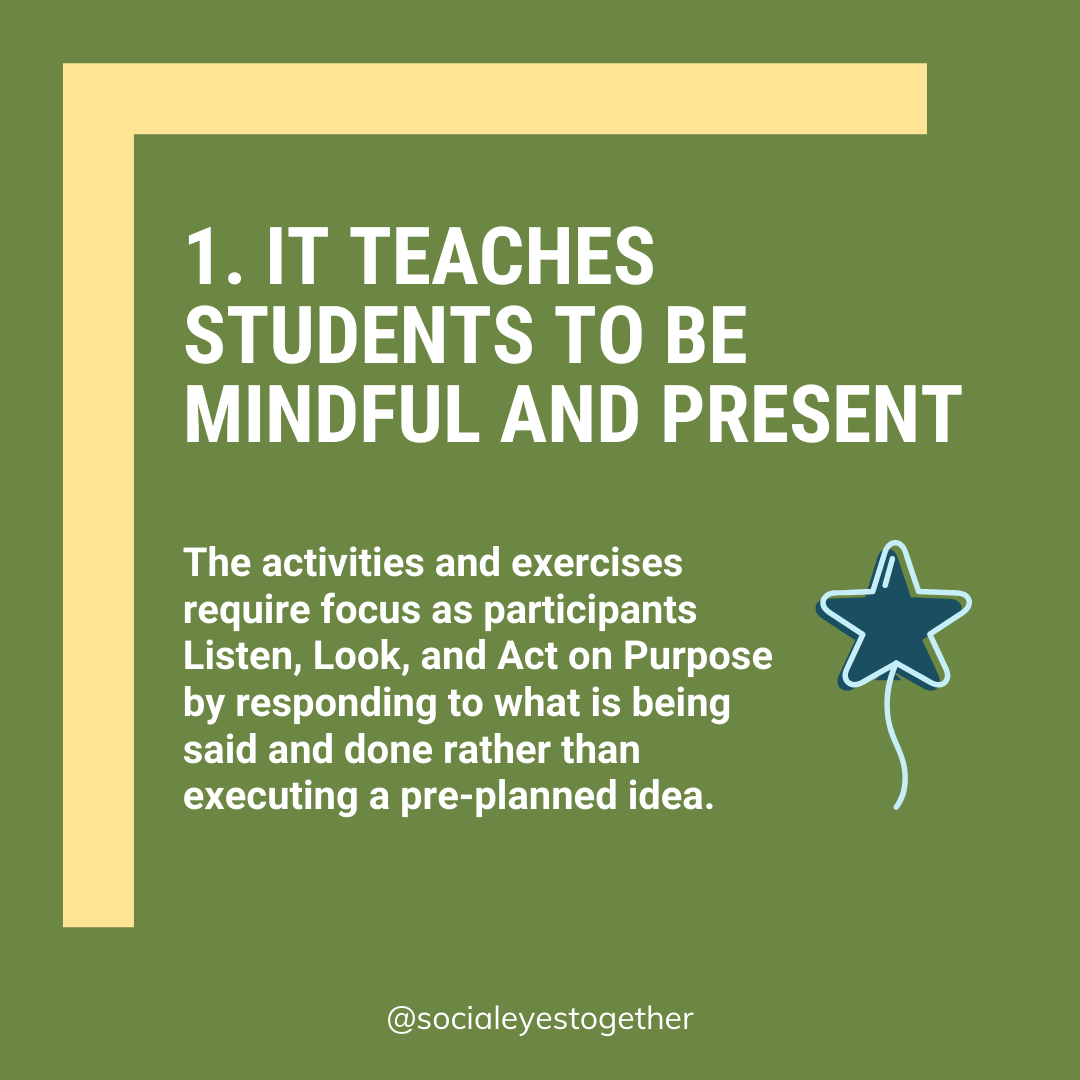
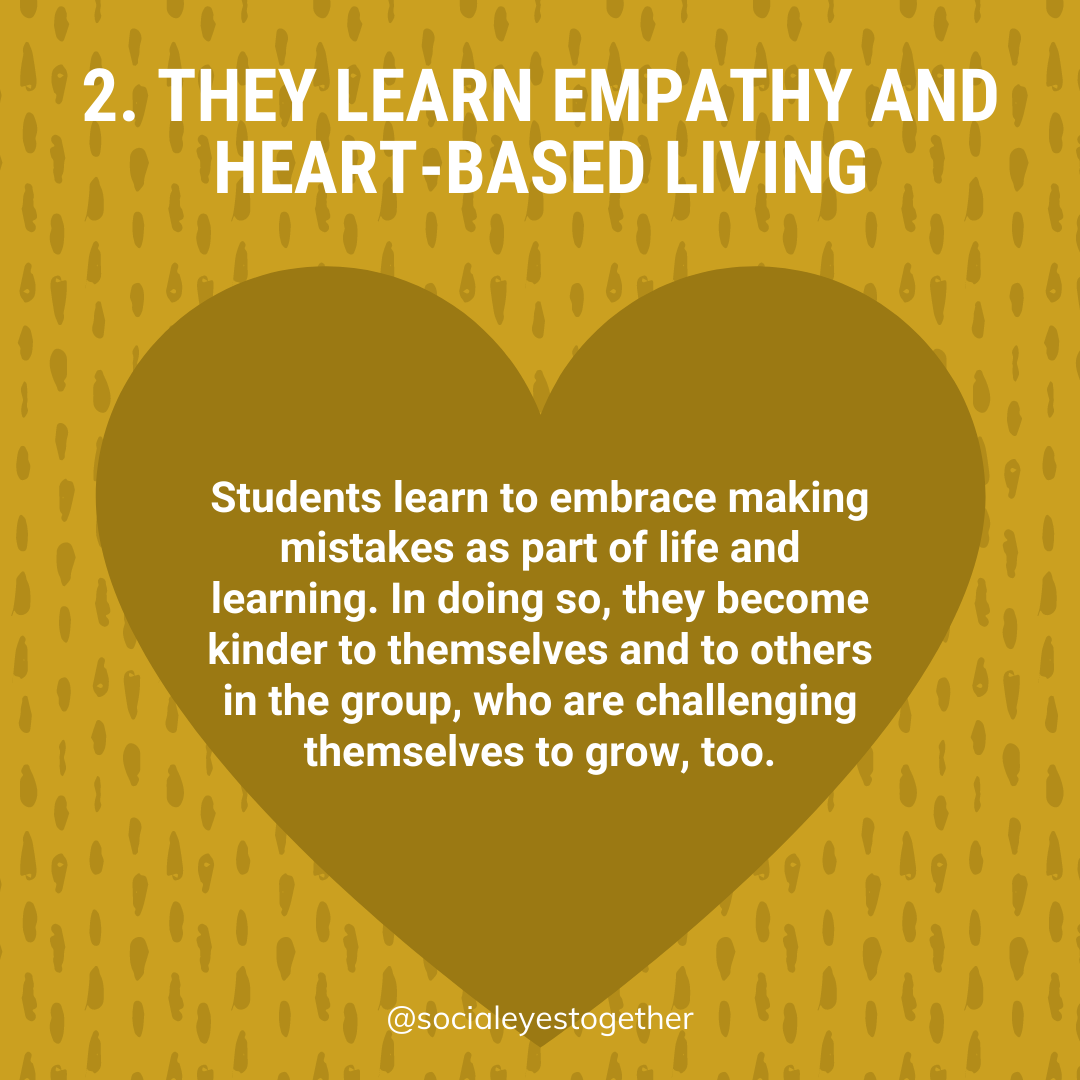
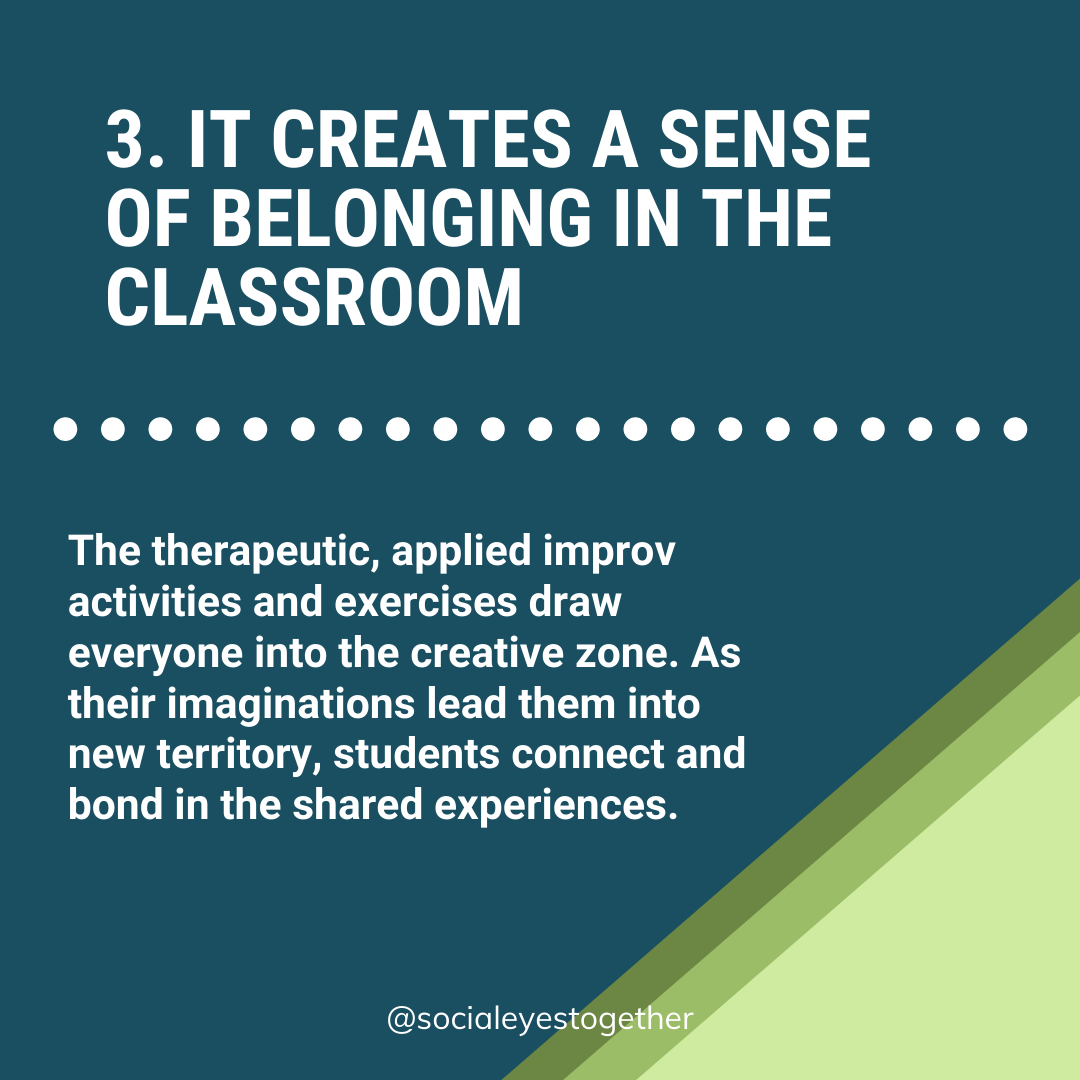
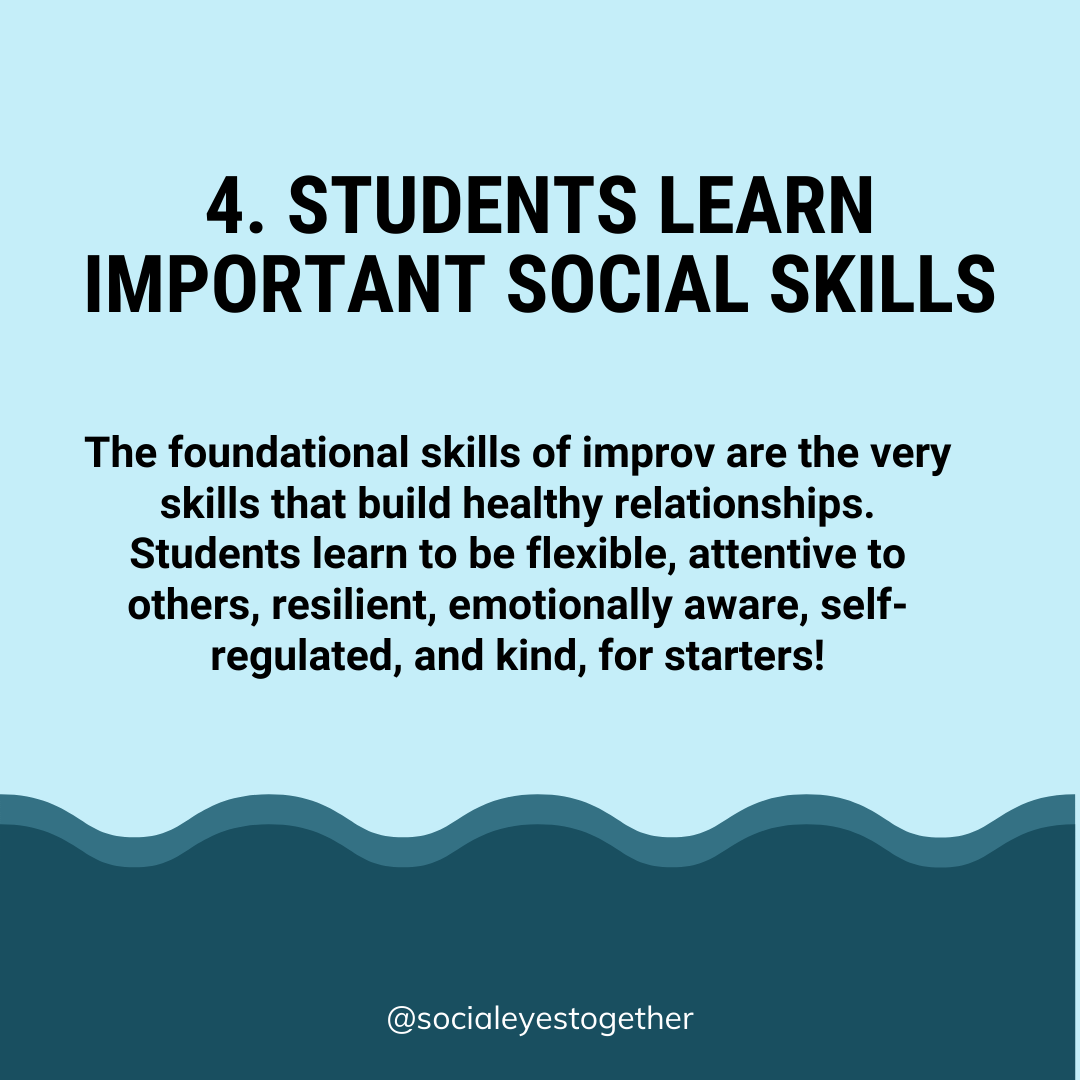
Featured Illustrations In Text Form5 Benefits of Using Improv For Social Emotional Learning
About the Author: Robin FoxRobin Fox, B.A. Psychology, M.Ed., is a Social- Emotional Learning educator, consultant, speaker, and professional improv actor. She works with Connecticut’s SEL Collaborative and partners with the CT Dept. of Education on SEL presentations and anti-bullying projects. Robin created Trust Talk for Teens, a non-defensive communication, brain science, and safe gun storage high school guide. Her book, SocialEyes Together®, helps socially challenged students navigate social/emotional challenges using Applied Improvisation, Mindfulness, and Social Cognition. (Read more from our magazine issues: click here to access our article database.) (From our AI in Education Track) (Last Updated: Friday, January 23rd, 2026) |