The School of Improvisation in Prague, Czech RepublicWritten by Karolina Harries – This article is from AIM Issue 2 (released November 2023). Photos courtesy of Karolina Harries. How the Christmas party helped me to become an AI trainerSometimes when one does not feel like going to a party, it might end up being the best party. This was the case nine years ago when I went to a Christmas party at the insistence of one of my clients. When I walked into the room everybody was standing in a big circle, laughing, and doing some crazily funny stuff. I thought to myself: “WOW!” I have been working in the self development profession for more than 15 years. That night, freshly new to improv, I decided this is something I want to learn. I wanted fun and ease in my training products, a change from the deep psychotherapy and coaching sessions I was offering. Ha! Little did I know… Soon after the party, I took my first improv lesson in the School of Applied Improvisation in Prague, and I was surprised by the insights, sharing, and vulnerability shown by the participants. Fast forward three years, I was offered a place as a trainer. I was extremely honored to join. It was so meaningful then, and remains so even now. For 10 years the school has been steadfastly advancing and refining its practices, prospering as a business and growing strong as a community. Thanks for joining me in sharing our approaches here.
Organic beginningsThe school was started by two founders: Martin Vasquez, an improviser and a trainer who conducts corporate events and workshops in Prague, Czech, and Ondřej Nečas, who at the time was mainly a marketing expert. When Martin met Ondřej, the former encouraged the latter to offer the Applied Improvisation experiences to the general public too. Ondřej (correctly) thought if it can work for teams in corporations, it must work for individuals too. It started with just one class per semester. Two trainers met 16 adult students of various ages and professions, once a week for three hours, over 13 weeks. The students would do an improv show for their friends and families upon graduation. The class was offered as “Applied Improvisation for self development”, using improv games to help people learn about themselves, with each activity followed by debrief, which led to opening up and learning to be vulnerable. It was one of the first improv courses in Prague that didn’t aim to train for stage improvisers, but to allow them to grow. When the first group graduated, the students asked for more. The co-founders did not plan for this, but responded with “Yes, and…” with a follow-up semester, and continued to offer the beginners’ course. After two semesters, the students wanted even more. At the end of the first year, there were students who enrolled in the beginners’ course and in two advanced classes (2nd and 3rd semester). And they asked to even go further!
What comes next?The founders asked themselves: ”What else can we offer to our students?” This is how the Theatropolis classes came into being. The program aims more at improv theater skills, but still with a focus on the applied part. The topics are very diverse such as musical, improvised Shakespeare, sitcom, body and dance, and authenticity. Now the School runs three semesters of “core” AI courses, and Theatropolis. All together there are approximately 15 groups, both morning and evening classes, each semester. Twice a year the students are invited to a special “Improv intensive weekend” in the outskirts of Prague. Its goal is to deepen the principles learned earlier, to connect, and of course have lots of fun. The school also organizes many other products, such as the Improv Festival twice a year, summer intensive week, corporate workshops, and fundraising activities for charities. One special product is international improv workshops, as many of our trainers are connected to a bigger, worldwide improv community. The School invited many well-known international trainers to deliver workshops, for example Jonathan Pitts, Jim Libby, Lee White, Shawn Kinley and more. The latest project is The Trainer Academy. It is a year-long train-the-trainer course for those who want to become AI facilitators. Yes, we are growing and prospering.
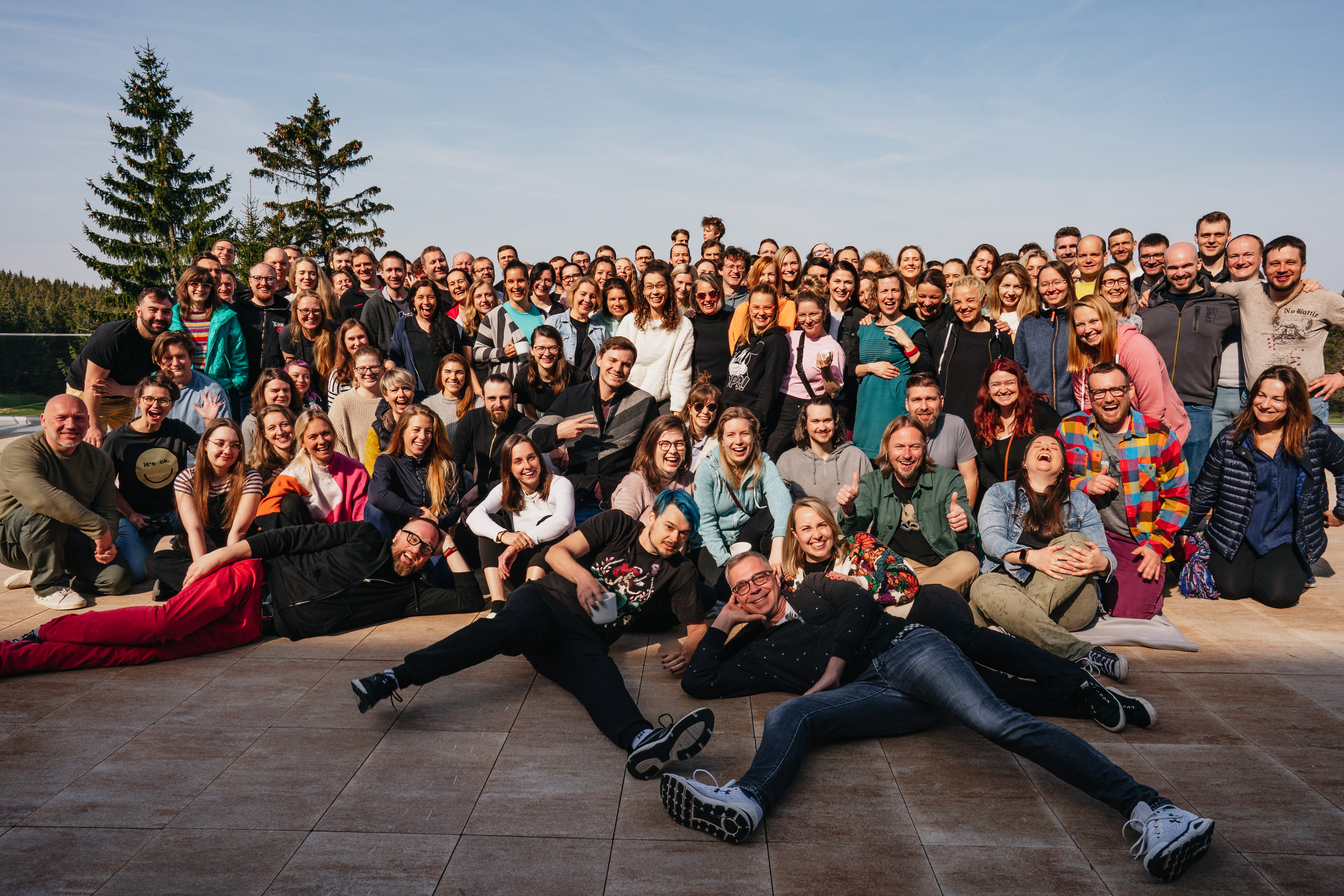
Three top success factors:1. MethodologyAs the number of students grew, so did the School’s training team. The initial team made of theater-based improvisers was complemented by trainers with solid experience in training, coaching and psychology. We have 23 trainers currently. Such a diverse training team brought new challenges. How to ensure training quality? How to balance the standardization while allowing customization? With learning objectives and improv principles in mind, it is not just a random mix of games selected from an individual trainer’s preference. That’s when the School started to look into the instructional design and created a curriculum for each class. Our improv “semester” is a longer version of other schools’ “level” workshops. The first semester had a more detailed and standard curriculum, with the second and third being more flexible which took into account the students’ needs and the individual trainers’ perspectives. This methodology helps the School be more consistent and professional, and allow individual trainers to shine with their personality, hence with more robust results. Often, students from one class continue together through the first three semesters, as they bond together strongly along the journey. In the event that someone needs to change a class to be with another cohort, our training design enables such a transition, smoothly. 2. Feedback, Supervision, Intervision, 1:1, internal workshopsThe evolution was not always smooth. With 23 trainers on the team, each going through different challenges in life and work, it was apparent very soon that it was necessary to create a space for sharing and caring. After each class, the two trainers give each other quick feedback, with thorough feedback at the end of semester. Once a month, an external professional comes in to run a regular supervision session. Even though it is rare that all trainers can be present, these meetings are important. Such sessions help the trainers to be mindful of what is going on during their own class, but also what happens in colleagues’ classes. Furthermore, it keeps them informed of things in each other’s lives that have an impact on the work, directly or indirectly. The team also has team meetings without an external facilitator or internal supervisor. Once a semester, Human Resources runs 1:1 meetings during which the trainers get more time to share and receive feedback. On top of that, the School offers internal workshops for its trainers – including those run by internal facilitators – and also “labs” run by internal trainers: spaces in which they can experiment, receive feedback and grow. 3. CommunityThere is no doubt one of the success factors is the community that we created. Current and former students, trainers, and their friends and families – even improvisers from other schools – create a larger improv community. The School’s Facebook account is followed by 10,000 people, and it is a place where the community can connect with each other and are actively doing so. Over the years, we have organized Christmas parties, summer barbeque parties, ballroom dancing events, and live and recorded improv talks. A few improv groups made up of our students have been formed over the years. Some are already quite established in the community, and some are at the beginning of the exciting journey. It is nice to see many students stay in touch with each other and with the School, even years after the completion of a course. Livelong relationships have been formed. Some people who met in improv even got married and now have babies! The lovely and respected American improviser, Jill Bernard, once said: “I know the lesson should be don’t date other improvisers, but really, who else is interesting enough to date?” I am blessed to have reluctantly “Yes, and…”-ed myself to an improvisation journey. The School has witnessed me grow tremendously, as a person and as a trainer, along with many others in Prague. So has the School. Now, I feel even more blessed to help people start their journey and have their first, “WOW!” Yes, and… let’s create and celebrate even more “WOW!”’s.
About the Author: Karolina HarriesKarolina is an Applied Improvisation practitioner working with teams and individuals. She focuses on cooperation, Design Thinking for innovations, and communication skills. Karolina is the chairperson of the AIN Global Conference 2024 in Prague, Czech Republic. (Read more from our magazine issues: click here to access our article database.) (Last Updated: Thursday, January 29th, 2026) |