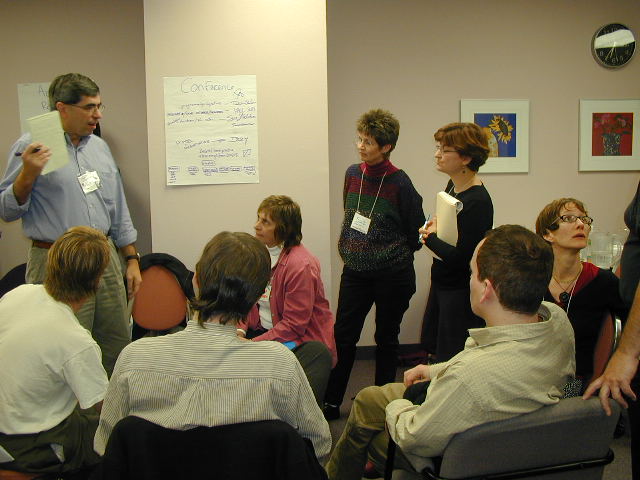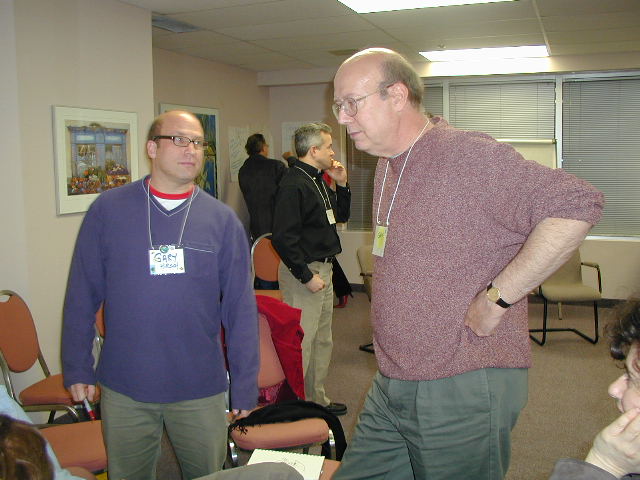
2003 AIN Global Conference - TorontoConference Date: November 2003
Location: Toronto, Canada
Summit on Improvisation in Business (SIB)
Conference Session DetailsSession: Improvisation as Emergent StrategyFacilitator: Michael BeanSynapse Teambuilding Time: Thursday at 10:15 am - 12:15pm
Description: Intended strategy is straight out of the strategic plan. Emergent strategy, on the other hand, is an impromptu response to unexpected developments. Realized strategy is what actually happens, for better or worse. Improvisation is the best metaphor for encouraging your clients to develop their capacity for emergent strategy, preparing them to deal with the unexpected. Participants will learn a variety of interactive exercises that can be used to explore and develop emergent strategy within an organization.
Towards an Improvising Culture: The Principles at PlayAndy Burnham, Vanessa AvRuskin!mprov at Work Saturday *(at)* 10.15-12.15
Through short stories, anecdotes and examples, this session explores and examines 6 fundamental principles supporting an improvisational culture in life, business and art. The objective is to deepen our understanding of the importance and application for individual and group improvisational skills in the workplace.
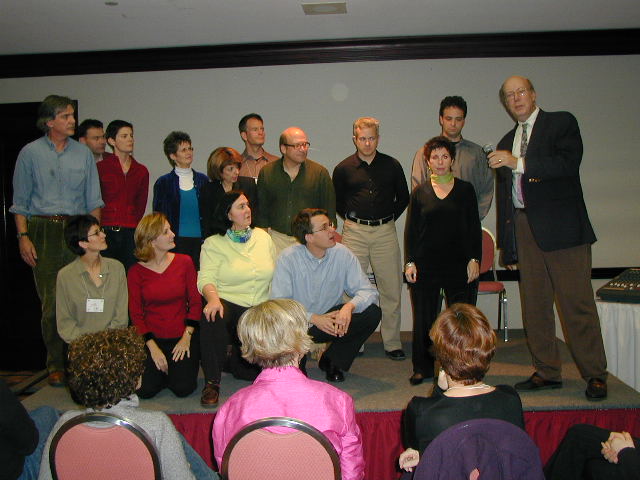
Gathering Our Stories - A Playback Theatre Performance
Nan Crawford Pacific Playback Theatre Christopher von Baeyer Artistic Director, Toronto Playback Theatre Project Senior Consultant, The Ariel Group Wednesday 8pm
The Playback Theatre format uses improvisation, intuition, music and movement to enact stories from audience members' lives. By honoring our individual experiences with empathy and authenticity, Playback Theatre builds bridges of understanding. Using both humor and compassion, Playback Theatre helps celebrate diverse perspectives and discover common ground. This performance will help launch the Summit on Improvisation in Business with an ensemble of players created from conference attendees. We will explore the many stories that bring us together, including our hopes, expectations and concerns for the coming days together.
Playback Theatre was founded in 1975 by Jonathan Fox and members of what is now known as The Original Playback Theatre Company. The International Playback Theatre Network has members from over 20 countries.
Sales Success Is in the Moment
Terrill Fischer In the Moment Productions Thursday 10.15-12.15
This session will demonstrate the power that perceptions have on sales and communications with Improvisational activities. We’ll help the participants identify communication styles, establish clear outcomes, increase active listening skills, develop questioning and probing for needs techniques, and learn valuable ways to close more sales. Participants will learn how to build relationships that enable them to handle objections and resistance that will make their customers feel like royalty and want to come back for more.
Propelling Aspirations with Psychodrama
Jennifer Atieno Fisher
Friday 1.30-3.00
See your big dream concretized and practice reaching it! Using the "future projection" technique from the psychodrama methodology, this session will allow several participants to experience firsthand the power of using action methods in personal coaching sessions. By physically mapping your dream and reversing roles with the component parts, you will gain greater clarity about how your aspirations connect to your heart and what the future is calling you to be. Atieno is a certified Psychodramatist.
The Business of Improv: Sales & Marketing Tips to Increase Your Bottom Line
Izzy Gesell Wide Angle Humor Thursday 10.15-12.15
For many of us the hardest part of the improv in business is getting the business or getting it consistently or perhaps getting it at a fee level we are happy with. This session is chock-full of practical tips, tactics and techniques that successful sales and marketers use.
Teaching Improvisation as a Business School Course
Dan Goldstein Columbia University Saturday 10.15-12.15
This session covers designing a course on improvisation relevant to business school students. Discussion topics include: appropriate content, relevant articles, suitable exercises, how to present a course to a business school, use of outside consultants.
Whose Team Is It Anyway? Simple Skills for Complex Team Work
Mike Goran Corpjesters
Stephen Friedman Partners in Learning & Development Thursday 1.30-3.00
A lively and engaging session during which Stephen & Mike will show how to blend Improvisation exercises with cutting edge Organizational Development theory into a tasty improv cocktail. Participants can then use their own ingredients & resources to strengthen & restore teams in their own organization.
Getting Out of the Temple of Yes
Gary Hirsch, Julie Huffaker, Brad Robertson On Your Feet Thursday 3.30-5.00
The blanket improv solution to all organizational ailments can be to stand up on the roof tops and exuberantly shout “Yes and……!” Often “yes and…” is exactly what the client needs, but is it always? This presentation will explore using a balance of safety and adventure when working with corporate clients. We will look at “Flow” dynamics with an emphasis on actions vs. semantics. We will look at the role for blocking (examining the situations where it might actually be helpful) and identify barriers to effectiveness when clients are advised to approach all issues from a “yes and….” perspective.
Stumble, Skip, or Dance? Examining How We Talk with Clients About Improv
Gary Hirsch, Julie Huffaker, Brad Robertson On Your Feet Friday 3.30-5.00
This is a facilitated discussion and idea-share opportunity to focus on creating and maintaining rich client relationships. The panel will explore questions such as: How do we talk to first-time clients—especially the skeptics and newcomers? When does improv come into the conversation, and how? How to we give them what they want and get what we want? How do we sustain relationships over time? What best practices, tips and stories can we share? What does the client from hell/heaven look like? The panel will consist of members of On Your Feet, as well as interested others. (Please contact Gary Hirsch at [email protected] if you wish to participate.)
Using Improv Improvisationally
Greg Hohn Transactors Improv Friday 1.30-3.00
It’s one thing to use improvisation as a teaching tool and to have a plan. It’s another to teach improv in an improvisational manner, adapting your exercises, focus, and lessons to differing situations. In this session we will do improv exercises and discuss them as well as their foci. We will also examine the differences between learning and teaching and ways to improvise a lesson plan. Beyond that I guess we’ll just see what happens…
Don’t Argue with Me! Living with and “Managing” Conflict
Diane Mashia Learning Out Loud Saturday 1.30-3.00
Participants begin by exploring together the sources of conflict in their individual lives. Through a brief self-assessment, they determine their preferred one out of five Modes of Conflict Resolution and Negotiation. Through a series of guided exercises, group improvisations and interactive discussions, participants learn about the nature of conflict, what makes it a challenge to deal with, and what centerpiece skills can best resolve differences in the various aspects of their personal and professional lives.
Adventures in Microfiction - A Workshop for Creative Writers
Denzil Meyers Widgetwonder Thursday 3.30-5.00
In this improv-based approach to writing as performance, we'll practice attending to characters and environment, accepting what one's muse or spontaneous mind provides, and emphasize flow and quality of experience for the writer. We'll write scenes and meet characters through the structure of a Harold, originally a stage performance form. We'll explore what becomes possible when writers view themselves as active peers in their characters' worlds, rather than as the Fat Controller of the narrative. Be prepared to write and volunteer (please) to read material created in the session. A conceptual "tool kit" from improvisational theatre will also be offered to assist in editing and managing narrative structure. Writers may bring scenes or characters from work in progress. Denzil has been conducting this workshop with writers in San Francisco for the past 18 months.
Just Don’t Call It Improv: Teambuilding Activities for Managers Who Fear Improvisation
Brian Cole Miller Working Solutions Friday 1.30-3.00
Managers can use great improv techniques to do teambuilding with their own staff—just don’t tell them it’s “improv.” Simple improv activities can be learned and done on the fly by busy managers who don’t have the time for extensive preparation, a cache of elaborate materials, access to trained facilitators, or patience for what they perceive as “fluff.” Learn how they can conduct quick teambuilding activities that get results in less than 15 minutes.
Demonstrating the Value of Improvisational Training: Tools for Assessing Individual and Group Outcomes
Dan Moshavi Assistant Professor of Management, Montana State University Friday 10.15-12.15
This session will focus on assessment tools and metrics that researchers and consultants can use to demonstrate the value of improvisational training to organizations. There will be specific attention paid to quantitative techniques that can be used to measure individual and group outcomes. Participants will draw from their own experience and discuss how these techniques might apply to their own research and practice.
Envisioning Your Service: Developing and Articulating Your Marketing Message
Cynthia Oelkers LEAP Development Friday 10.15-12.15
Do you effectively communicate the vision, values, and advantages of your business? Crafting a message that clearly demonstrates the benefits of your service is essential to gaining and growing business. In this session, we will workshop YOUR ideas. Through a series of exercises, we will home in on your core values, get a feel for your brand, build a tag line, and present a 30 second “elevator pitch.”
Creative Connections: Building Creative Muscles and Environments
Cynthia Oelkers LEAP Development Saturday 10.15-12.15
Innovation is essential to flourishing, despite today’s business climate. Come learn the latest research on creativity and innovation, and experience exercises that bring the concepts to life. This workshop will focus on removing the environmental barriers to creativity while enhancing your own skills at making creative connections by exploring the work of Csikszentmihalyi, Sternberg, Amabile and others.
The Impossible Partner
Stevie Ray Stevie Ray’s Improv Company Friday 3.30-5.00
Use the techniques and philosophies of improvisation to stay in control of difficult situations. Handle uncooperative clients and co-workers more effectively. Put yourself in command of the situation, even when you’re not. These techniques are valuable for leaders, facilitators, trainers, teachers, and team members. Stevie Ray draws on over 25 years of experience in improvisation training and has taught hundreds of corporations nationwide.
Discover Your Humor Style
Carla Rieger Creative Leadership Strategies Thursday 1.30-3.00
In this session, you will discover your dominant style as a humorist. Then in groups you will explore the strengths and weaknesses of each style and perform an improvised scene illustrating these characteristics to the rest of the group. You will then learn how to ascertain the humor styles of your listeners, so you can match your style with theirs.
A Level 4 Evaluation of the Role of Improvisation in Organizations Michael Rosenberg Flexible Thinker Friday 10.15-12.15
Using the City of Brampton along with other organizations, this session looks at how The Flexible Thinker, which is improvisational based, has produced measurable results for organizations. In addition, this session will examine the resistance within corporations to this type of program and the challenges in implementing it to begin to affect the culture.
Incorporating Improvisation into Ideation SessionsAlain RostainCreative Advantage Saturday *(at)* 10.15-12.15
Improvisation offers a powerful set of tools for group ideation. The key is to provide clear context and strong tiebacks to personal and group objectives. We will play, debrief and discuss several classic exercises we use to break-the-ice, teach creativity concepts, stretch creative muscles and prepare participants for brainstorming. Participants will learn about improvisation in the context of innovation and ideation. They will learn how to incorporate the principles, methods and tools of improvisation to make these meetings more effective. Includes setting-up, running, side coaching and debriefing several powerful improv games.
Performance in Everyday LifeCathy SalitPerformance of a Lifetime Thursday *(at)* 3.30-5.00
Performance of a Lifetime’s (POAL) programs embody the philosophy that all human beings are innately performers — and that our capacity to grow and discover new life possibilities is unleashed in improvisational performance. We break away from any concerns of “what” of the performance is “about,” and focus instead on the fact that we can create new and varied performances — wherever we are. This radical approach is gaining traction in the training world — as well as in many Fortune 500 companies. This workshop will allow participants to experience examples of the kind of programs described above.
Creating Peerage in the WorkplaceGary SchwartzIntuitive Learning Systems Saturday *(at)* 1.30-3.00
Games are not used to create winners and losers; they are structures that eliminate the urge to judge performance while playing thus creating fellow players rather than competitors. Using evaluation rather than critique, coaches can work with cross-sections of a company's hierarchy to bring a new atmosphere of open communication in employer/employee relationships and employee/employee relations as well. Games like 'Kitty Wants a Corner' and other high energy focus games create an active participation that keeps players in present time. Counting Numbers game and other simple structures will illustrate how easily focus and simple evaluation erases judgment and self-consciousness as making mistakes are 'built into the game' and are part of the fun. The game of Unrelated Conversations will further illustrate the value of listening with a strong focus will bring about an almost total retention of information.
Spontaneity: The Building Blocks of ImprovisationGary Schwartz
Spolin Theater Games are an exciting way to develop improv performance skills and new ways of working on acting skills(communication/relationship). Through playing, an energy source opens up between people. Acting for the theater evolves naturally out of playing. Recognizing this source of energy, famed educator/director/teacher Viola Spolin (regarded as the mother of American improvisation) applied the game form to theater disciplines and arrived at her widely acclaimed Spolin Theater Games technique. The workshop will expand your ability to play with gusto and inspiration!
Organizational Dancing: Teaching Leadership Skills through Improvisational Movement ExercisesYael SchyDramatic Strides Consulting Saturday *(at)* 3.30-5.00
Today’s organizations require that workers be adaptable. Truly effective leaders must know how and when to follow, and productive team members must be able to take the lead when needed. The daily “dance” between leaders and followers requires mutual understanding and a balance of give and take. This active workshop utilizes innovative improvisational movement techniques for understanding principles of leading and following in organizations. Through a combination of physical exercises and debriefing discussions, participants will gain new insights and tools for working with clients in developing leadership and teambuilding skills.
Living Life Lightly: An Approach to Stress ManagementSue WaldenImprovWorks Thursday *(at)* 10.15-12.15
Stress is a many-faceted issue that makes our daily life difficult and compromises our health. This session will deal with one major cause of stress: the mind. Over-trained, over-rated and over-bearing, the mind operates under the mistaken presumption that it is the master rather than one of our tools. Using various tips, tools and techniques from improv training, we’ll play with changing our relationship to our mind, and practice in potentially chaotic and stressful situations.
Framing Improv as a True Experiential Learning ToolAndrew Welchintellect canada Saturday *(at)* 1.30-3.00
This session will explore the application of specific corporate experiential education theories to theatrical improvisation activities, with the objectives of more focussed *(focused)*, outcome-driven program design and delivery. We will also experience how certain core experiential facilitation methodologies can be used to heighten the effectiveness of improvisation as a learning tool in a business setting. The interplay of standard business models and improv teaching techniques will also be discussed, supported by completely original activities.
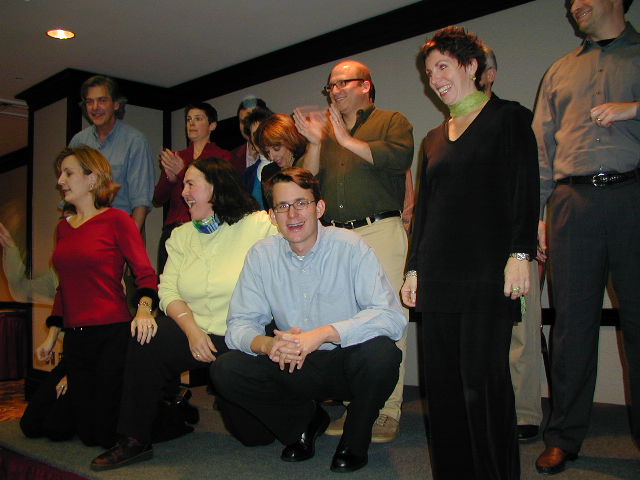
From Nan Crawford, Pacific Playback Theatre:From Nan Crawford, Artistic Director - Pacific Playback Theatre, San Francisco: I've just returned from Toronto and the Summit on Improvisation in Business which was a wonderful gathering. The conference was produced by the Association for the Advancement of Improvisation in Business [AAIB]. http://www.improvinbiz.org For the opening conference general session, Christopher von Baeyer [Artistic Director of Toronto Playback Theatre Project] and I co-conducted a Playback performance. Our ensemble constituted participants of the conference who had some previous Playback experience, including Carla Rieger, founder of Vancouver Playback [Canada], Jacqueline Wislesky and Syra Porter from Sudbury Playback [Ontario, Canada], and Talia Shafir from Sonoma County Playback [California, USA]. Our performance was tremendously well received. Many of the conference participants - who have various improvisation backgrounds including traditions from Viola Spolin and Keith Johnstone - had heard of Playback Theatre, but never seen it. Our performance explored shared intentions and expectations for the conference, successful stories of applying improvisation in business, and stories of what we had left behind in order to be present at the conference. The players used few words and wonderful physicality to portray the passion and playfulness, love and loss that was shared by the audience. And Chris and I had a delightful time creating the framework for our co-conducting, crafting the structure of the evening, and mentoring one another in our roles as Artistic Directors of our own companies. The conference sessions offered numerous reminders for ways to translate improvisational skills into business contexts by clearly stating outcomes and building direct bridges to day-to-day workplace behavior. Participants from Canada, US, UK, Germany and Switzerland shared stories and new ideas for debriefing, marketing and following up Improvisation in Business sessions. It is a very generous, bright group. Contact information and other conference materials are available at the web-site. The next conference will be in San Francisco, Autumn of 2004. To learn more about the next conference and share ideas with this global community there is an email list serve that people can join, also via their web-site. It was quite a remarkable Autumn for me to journey to Japan for the IPTN gathering, and then to Canada for the AAIB event. As I am excited to share resources from both of these circles, I thought another good way to introduce the Improvisation in Business group to this IPTN audience might be to share their mission and values statements. I hope you find some resonance as I do, and I encourage you to participate in the growth of this new community. Association for the Advancement of Improvisation in Business Our members are business professionals and academics who use improvisation tools, experience, and theory for human development and training in communities and organizations. These applications may include-but are not limited to-facilitating creativity, innovation, effective strategy, organizational vitality and alignment, better relationships, conflict resolution, and storytelling. Purpose * Touchstone to help working groups make good quality decisions about community projects such as the annual conference, research projects, training programs, knowledge sharing efforts, etc. * Starting place for designing communications, PR messages, recruiting new members, recruiting corporate sponsors for research, and promoting the legitimacy of our practice. Our Shared Values We believe * In the power of improv practice to improve the quality of human lives, communities, and organizational relationships; * The experiential value of play, spontaneity, and intuition promotes personal and professional growth, and nurtures innovation; * Co-creativity is a life-skill that helps individuals live more meaningfully, and drives organizational performance; * Improv's emphasis on generosity, cooperation, trust, and experimentation counterbalances fear, and releases creativity; * Support, community, and encouragement as we develop the field; * A practical resource for best practices, learning, ideas, new applications, and the education of newcomers; * Inspiration that contributes to the vitality and momentum of this body of practice, and attracts new practitioners and clients;
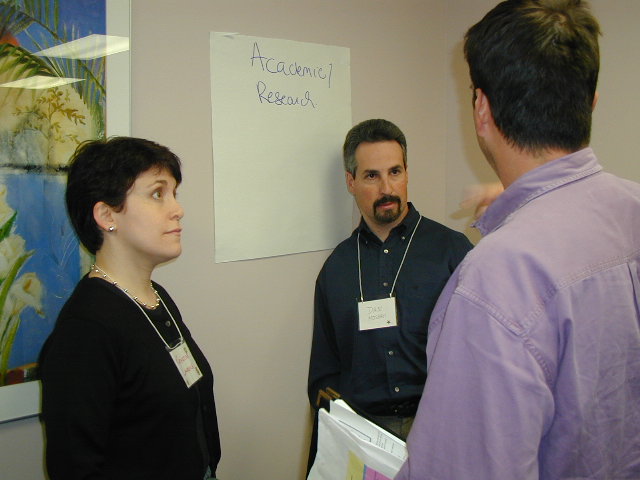
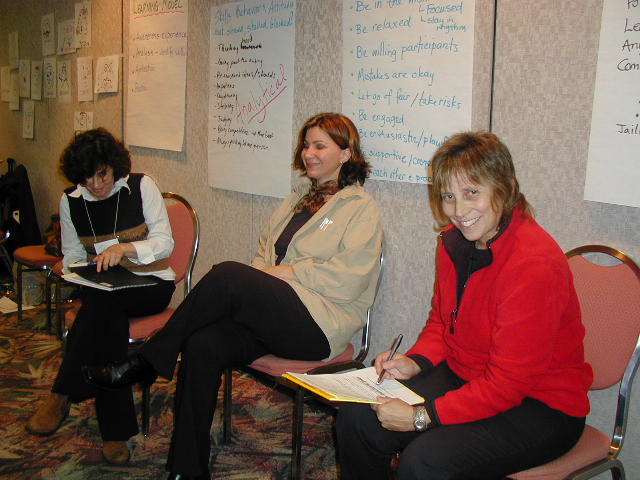
Photos
Credit: Photos courtesy of Joel Veenstra Click here to view our list of past conferences. This page was retrieved from an older website for our archives. (Last Updated: Thursday, June 25th, 2026) *(Corrections)* |